Our story
Preserving a culture, one table at a time.
Dolan exists to preserve, celebrate and share the food of the Uyghur people — and, through it, a culture that deserves to be known. We cook the dishes Uyghur families have cooked for generations, by hand and 100% halal, and we set them on tables where neighbors, newcomers and old friends can discover a heritage most of them have never encountered. Every bowl of hand-pulled noodles, every kebab from the tandoor and every pot of Gül Chai is an invitation: taste where we come from, hear our story, and count a memory with us.
A Taste of Tradition, A Journey Through History
The name "Dolan" traces back to an ancient Uyghur tribe, known for their rich cultural heritage, their music, and their deep connection to the Taklamakan Desert. Their legacy endures through art, tradition and cuisine, carrying the essence of Uyghur culture across generations.
At Dolan Uyghur Restaurant, we honor this history by bringing you the authentic flavors of Uyghur cuisine — a story of tradition, resilience and the vibrant spirit of Central Asia. As you dine with us, we invite you to experience more than a meal. Imagine the snow-capped mountains, winding rivers and blue-green lakes that have long been home to the Uyghur people.
Thank you for being part of our story and sharing in the flavors of Uyghur culture.
Where we come from
The Uyghurs are a Turkic-speaking people, mostly Muslim, whose homeland — East Turkistan, in the heart of Central Asia — has sat on the Silk Road for more than a thousand years. Traders passing through brought spices, dough techniques and flavors from every direction, and Uyghur cooks made them their own. That is why a Uyghur table can taste of Turkey one moment (rich gravies, cumin-rubbed lamb) and of China the next (hand-pulled noodles, wok-fried peppers), and why it ultimately tastes like nowhere else.
Among the Uyghurs, the Dolan were a semi-nomadic tribe living in the oases around the Tarim and Yarkand rivers, on the edge of the Taklamakan Desert. They are remembered above all for their music and dance — the Dolan muqam, still performed today, is part of the Uyghur muqam tradition recognized around the world. We took their name because it stands for what we want every meal here to be: heritage, beauty and something made by hand.
“Imagine the snow-capped mountains, winding rivers and blue-green lakes that have long been home to the Uyghur people.”

Founder & owner
Hamid Kerim
Born in Ghulja, East Turkistan. Pharmacist by training, entrepreneur by trade, restaurateur by necessity and then by love. Hamid took over the Cleveland Park restaurant in 2018 and reopened it as Dolan that September after a three-month crash course in Uyghur cooking, and has since opened four more restaurants, a café, a central kitchen and a product line. He lives in Northern Virginia with his wife and four children.
Before Dolan
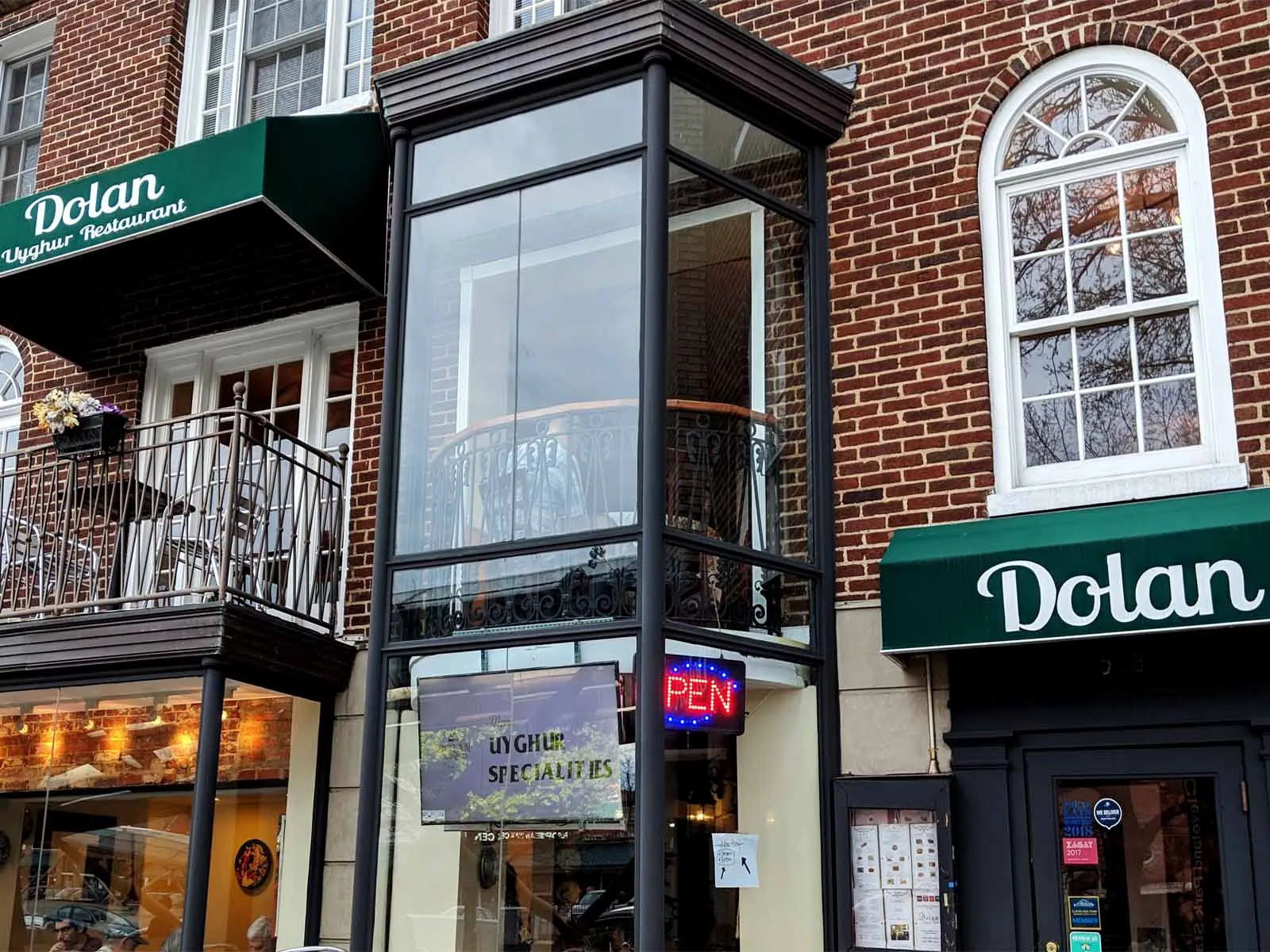
Every story has a prologue. In late 2016 a Uyghur family opened a small restaurant at 3518 Connecticut Avenue NW in Cleveland Park, a block from the Metro, and in January 2017 The Washington Post's critic reviewed it and rated it “Good.” In 2018 the family decided to sell. The dining room they built — the green awnings, the upstairs balcony, the kebabs and chuchure soup — is where Dolan's story begins, under a new owner, on September 10, 2018.
Read the 2017 review on Press & StoriesA new beginning in Cleveland Park
From a pharmacy in Ghulja to a kitchen on Connecticut Avenue.
Our founder, Hamid Kerim, grew up in Ghulja. He trained as a pharmacist, then built an import-export business that grew to fifteen companies trading between his homeland, Turkey and Central Asia. In 2017 he learned that his name was on a government list, and he left — without saying goodbye to his mother — to start over in Northern Virginia with his wife and two young children. He did not speak English. He had never cooked professionally.
In 2018 he saw that the small Uyghur restaurant in Cleveland Park was for sale. He bought it, asked its owner to spend three months teaching him the dishes, restructured the business and reopened it as Dolan on September 10, 2018. He hired a staff of hard-working immigrants from around the world and taught them what he had just learned. In those early days he greeted every table through an interpreter; before long he could tell his own story in English.
Washingtonian put Dolan on its Cheap Eats list that first autumn — and again the next year.
Staying open, giving back
When the pandemic arrived in 2020, Dolan never closed for a single day. We cooked for carryout and delivery, reopened our patio the moment the city allowed it, and leaned on a Cleveland Park neighborhood that kept showing up for goshnan and piter manta. From June 2020 we delivered free Uyghur meals to healthcare workers on the front lines in Washington, and in early 2021 we brought hot meals to the National Guard troops stationed in the city. "I love this country," Hamid told the Washington Business Journal. "Now my dream is to do something for this country."
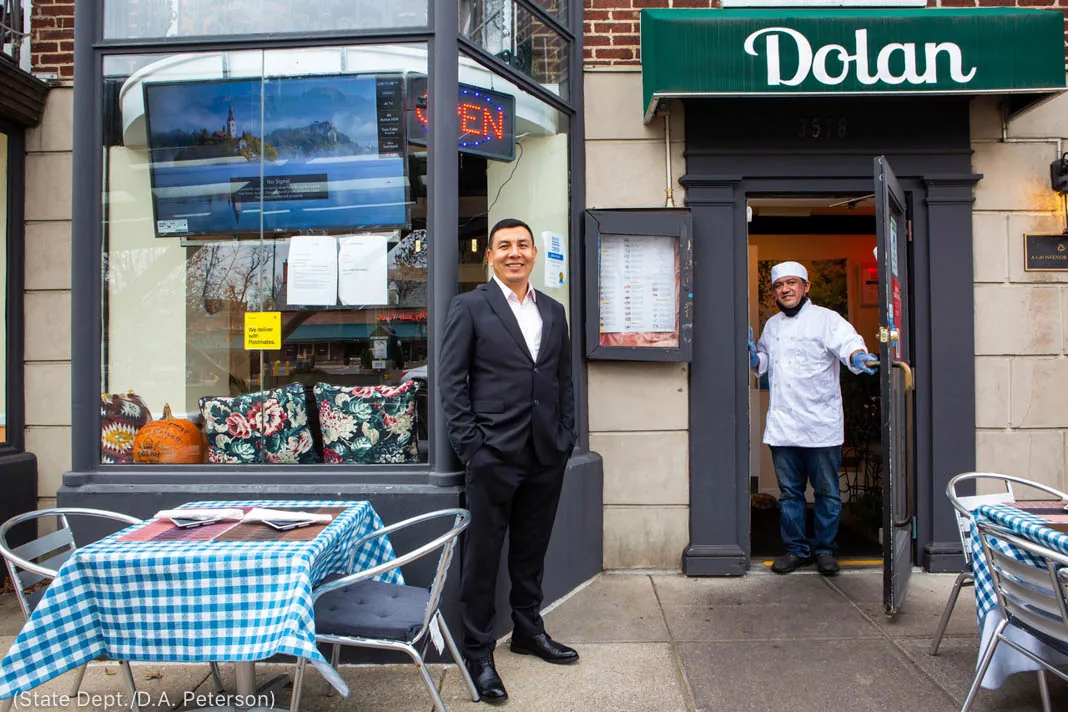
Hamid Kerim and chef Mohamad Tauhid outside the Cleveland Park restaurant, 2020 (State Dept./D.A. Peterson).
In his own words
From Ghulja to Cleveland Park
Hamid Kerim wrote down his story for us in November 2026 — the long version is on Press & Stories.
I was born in 1981 in Nilka County, in the greater Ghulja area, in a large family with six brothers and sisters, and some of my most meaningful childhood memories are connected to food. When I see a large plate of Uyghur polo today, I remember sharing food with my parents, brothers and sisters as one family.
I immigrated to the United States in May 2017 with my wife and our two children and had to start over from almost nothing. My English was very limited, so I drove for Uber and Lyft, often 15 or 16 hours a day. In September 2018, I learned that a small Uyghur restaurant on Connecticut Avenue was for sale. It was losing money — but I saw a chance to introduce Uyghur food to more Americans, and a mission to preserve and share our culture.
Dolan is the second chapter of my life. Success means seeing a family share a plate of polo, or watching someone try hand-pulled noodles for the first time. Every dish we serve carries a piece of our history.
Our brand
Our brand: the Badam Doppa
Dolan Uyghur Restaurant is one of the first Uyghur restaurants in Washington, DC and Northern Virginia, and in every one of our dining rooms it is the connection between Uyghur culture and Americans. That mission is woven through everything we do. When you walk through our doors, you are greeted by tapestries and art depicting everyday Uyghur life.
- Doppa
- The embroidered skullcap worn across Central Asia; badam is the almond shape stitched into it.
- Our teal
- Inspired by the painted walls and carved wood of traditional Ghulja homes.

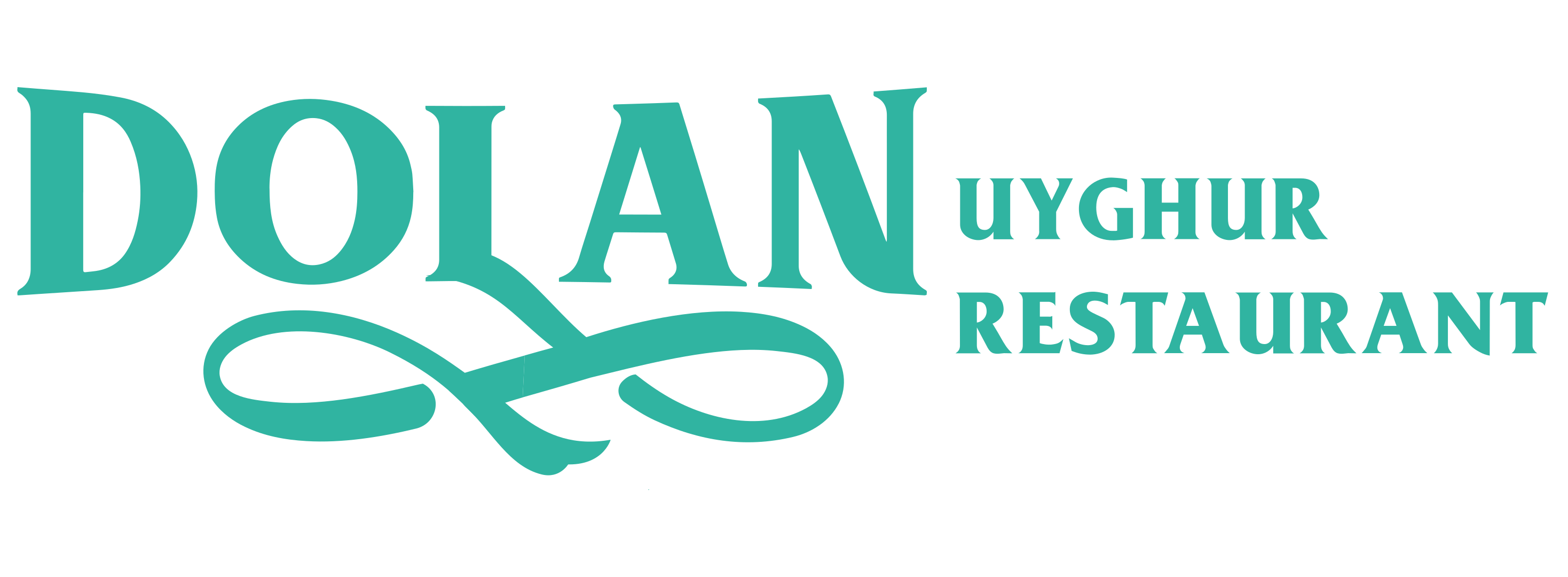
In our branding you'll see a traditional Badam Doppa icon combined with "Dolan" written in script — its flowing line drawn with noodles, the hand-pulled laghman at the heart of our kitchen. Our colors are inspired by the traditional home architecture of Ghulja: the teal-painted walls and carved wood of the houses where our founder grew up. A doppa is the traditional skullcap worn across Central Asia, and badam refers to the almond shape so often embroidered on the caps.
Together, the Badam Doppa and our name carry a message of history, heritage, beauty and poetry. Most of all, our brand conveys the feeling of being handmade with care, just like the dishes on our menu. When you see it, we hope you feel peace — and look forward to your next meal shared with loved ones.
Read the story of the painting on our wall

About the Uyghurs
The Uyghurs are a Turkic people whose homeland lies in the heart of Central Asia, where the Silk Road's caravans stopped to trade, rest and eat. Imagine the snow-capped mountains, winding rivers and blue-green lakes that have long been home to the Uyghur people. Around the Taklamakan Desert, oasis cities like Kashgar, Turpan and Ghulja grew a culture of muqam music, embroidered doppa caps, carpets and silk — and a table where tea is poured before any question is asked. The food we serve is that culture, still living.
Read the full storyGrowing, one dining room at a time
From one dining room to five — and beyond.
A short history of Dolan: a prologue, then doors opening one by one, ending with the chapter that travels.
2016–2018
Before Dolan
A Uyghur family opens the Cleveland Park restaurant (late 2016); The Washington Post reviews it (January 2017); the family decides to sell (2018).
September 10, 2018
Washington, DC — Cleveland Park
Hamid Kerim takes over, restructures and reopens the restaurant as Dolan after a three-month crash course in Uyghur cooking. Our story begins. Washingtonian names it a Cheap Eats pick that autumn.
June 2020
Staying open, giving back
Never closed a day through the pandemic; free meals to Washington's healthcare workers, then to National Guard troops in early 2021.
June 28, 2021
A book launch in Cleveland Park
Our dining room hosts the community launch of Geoffrey Cain's The Perfect Police State — poetry, a Q&A, live Uyghur music and a buffet.
July 1, 2021
Chantilly, Virginia
Our second restaurant, near the neighborhood Hamid's family calls home. Northern Virginia Magazine called our Uyghur polo “the finest item that emerges from the kitchen.”
November 21, 2022
Dolan Coffee
A café at the Cleveland Park restaurant, pouring illy coffee from 8 am alongside our own tea and pastries.
November 11, 2024
Falls Church, Virginia
Our largest home: 154 seats, a 42-seat patio, a bar, Turkish breakfast and brunch service, and live Uyghur, Central Asian and Turkish music every Friday and Saturday evening.
Along the way
Our own central kitchen
As we grew, we built a production kitchen so that every Dolan serves the same hand-pulled noodles, the same samsa and the same from-scratch desserts — and so our pastry program could grow into Dolan Wholesale.
August 9, 2025
Rockville, Maryland
Our first Maryland restaurant, at The Square in Rockville Town Center. Bethesda Magazine's critic found “a museum-like display of cultural curios” at the entrance, globe lights “lifted from a Turkish teahouse from the 1850s,” and servers who are “unfailingly attentive and caring.”
July 17, 2026
Arlington, Virginia — Crystal City
Our fifth dining room, in Crystal City, with a few Turkish and Mediterranean additions to the Dolan classics.
Along the way
DolanMarket.com — the next chapter
Our online marketplace brings two products our guests had long asked to take home — Dolan Gül Chai floral tea and Dolan Chili Oil Sauce — to doorsteps across the United States, and to the shelves of Amazon, Walmart and eBay.
Why we do this
A plate of laghman can start a conversation that a headline cannot.
Hamid will tell you he is not a politician — he is a businessman and a cook. But he also knows that a plate of laghman can start a conversation that a headline cannot. "I cannot protest outside every day saying I'm Uyghur," he told Washington City Paper. "But in here, at least 50,000 people [come in]. They eat this food, think about it, ask what this food is." Every guest who leaves knowing a little more about the Uyghur people — their food, their music, their hospitality — is part of the reason Dolan exists.
More than the food, we want you to discover the culture and count memories with us.
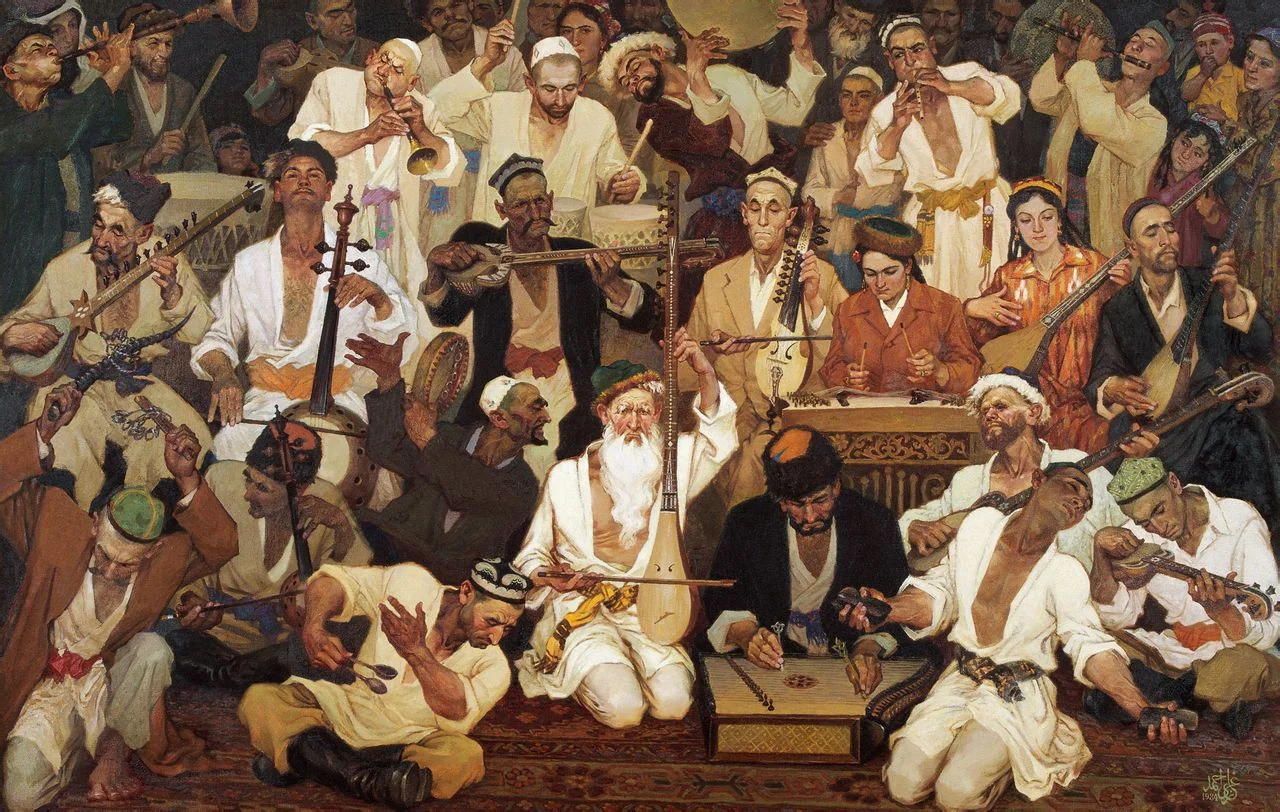
The painting on our wall
Step into Dolan and you'll likely meet Ghazi Ehmet's "Muqam" (1984), the most recognized painting in Uyghur art. Musicians with rawap, dutar and drums, every man in his doppa, gathered for the muqam — the suites of song, poetry and dance performed across the Uyghur homeland for centuries. It hangs in Uyghur homes and restaurants all over the world, and in ours, so that you see where this food comes from.
Ghazi Ehmet, Muqam (1984). Read the story of the painting
What's on the table
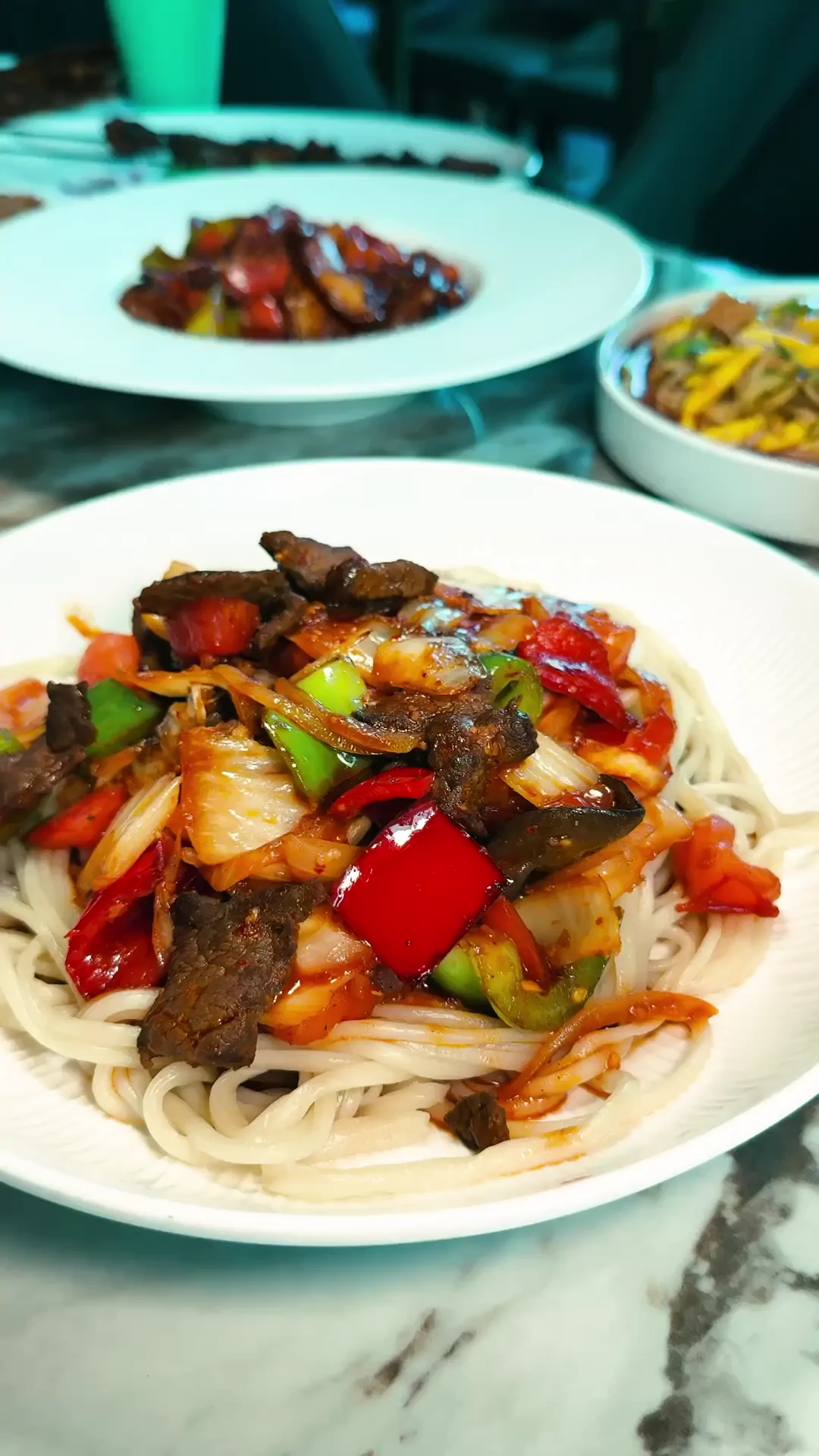
Uyghur cooking is built on wheat and fire: noodles pulled by hand, breads baked in a tandoor, dumplings steamed and pies baked. Lamb is the meat of choice, cumin and chili the signature spices, and vegetables arrive wok-fried and bright. Meals begin with tea and end with tea — ours is Dolan Gul Chai, a caffeine-free blend of flowers and fruit from a family recipe.

A message to our guests
From our family to yours.
Since opening our first doors in September 2018 in Cleveland Park, Washington, DC, we have grown to five thriving locations, built our own central kitchen, and launched our online marketplace with two products we are proud of. Along the way, we have had the privilege of introducing thousands of guests to the rich flavors and traditions of Uyghur cuisine.
None of it would have happened without you. Our success comes from your unwavering support and your appetite for culinary exploration. Thank you for joining us today and for celebrating Uyghur culture with every dish we serve. We remain committed to bringing authentic Uyghur flavors to your table, and we are deeply grateful that you have chosen to be part of our continuing story.
From our family to yours — thank you.
Hamid Kerim and the Dolan family
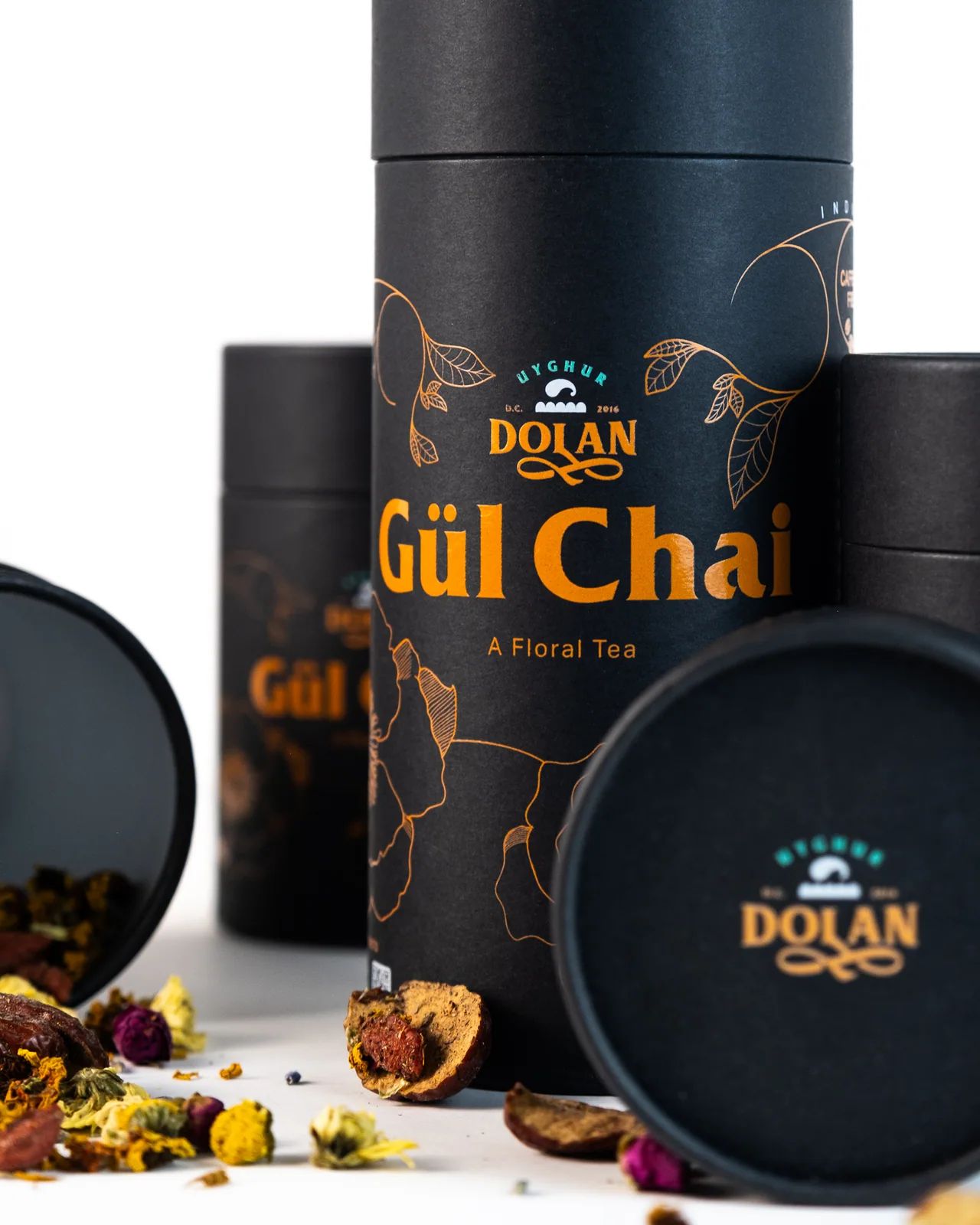
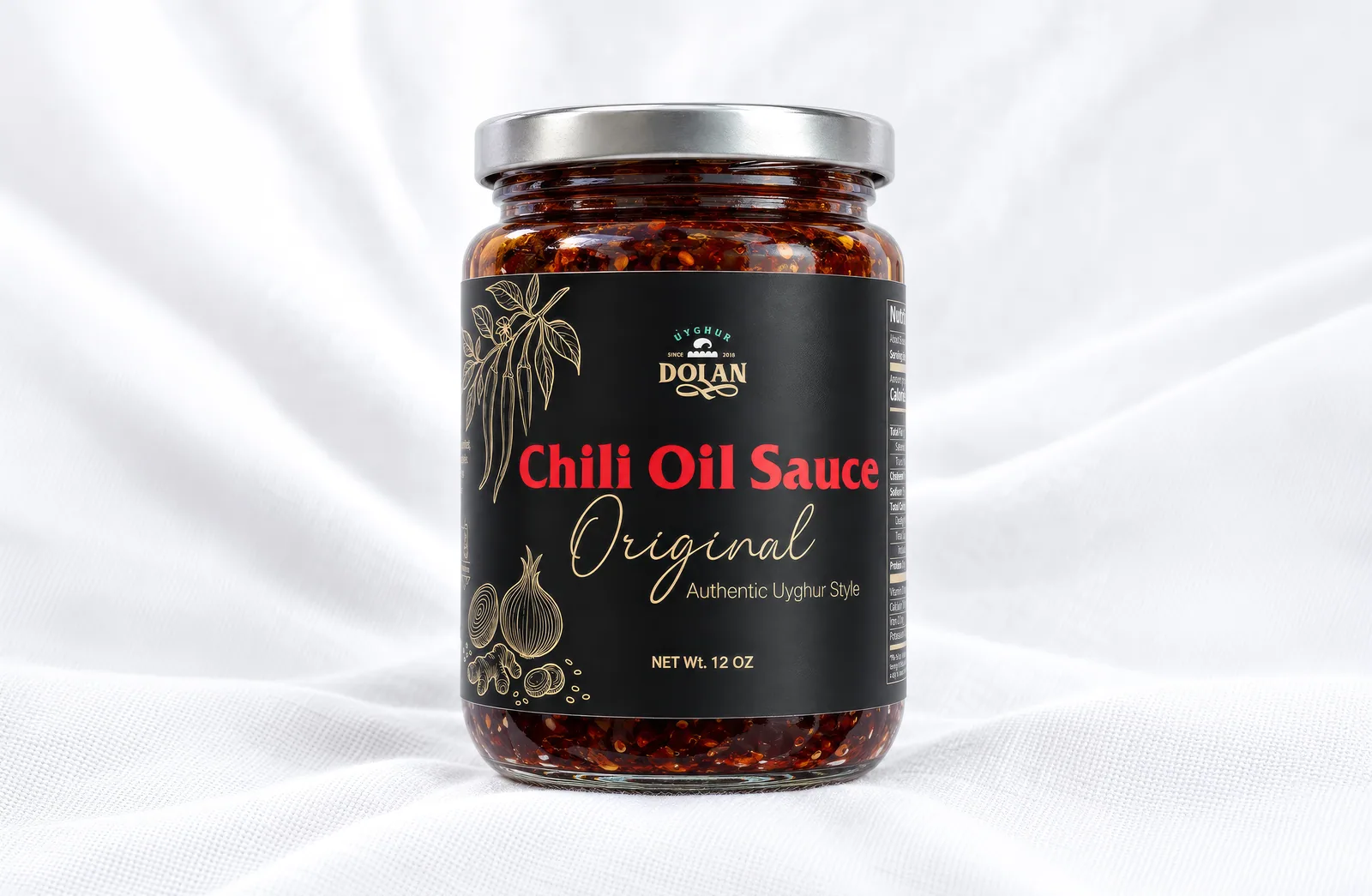
For years the question came at the end of the meal. Guests finished a pot of Gül Chai and asked whether they could buy the tea. They spooned our house chili oil over laghman and asked whether it came in a jar. For a long time the honest answer was no — the blend was made for our kitchens, and the chili oil was stirred in small batches for the table.
Dolan Market is our answer now. It began with the two products our guests asked for most, made the way we make everything: by hand, with the ingredients we would serve to the people we love most.
Dolan Gül Chai is the floral tea that ends every Uyghur meal in our dining rooms — dried goji berries, red dates, rose buds, snow daisies, lavender and chrysanthemum, from an authentic Uyghur recipe perfected over generations. Each ingredient is individually selected, harvested and dried; the blend is 100% natural, caffeine-free and GMO-free, and comes in 50 g and 100 g canisters (Dolan Gül Chai - 50g and Dolan Gül Chai - 100g). Ten percent of each purchase supports the Dolan Uyghur Culture Foundation.
Dolan Chili Oil Sauce is the condiment we have served beside hand-pulled noodles, cold noodles and dumplings since 2018, now in 12 oz jars. Original builds deep, savory heat from cayenne pepper, sesame seeds, onions and ginger root; Garlic Spicy adds garlic for a bolder, garlicky finish. Both are made by Dolan Uyghur Restaurant in Virginia. Spoon either over noodles, naan, dumplings, grilled meat, rice, soup or vegetables.
Dolan Market ships both across the United States, with orders processed within 24 hours of payment. You will also find Dolan products on Amazon, Walmart and eBay, in every Dolan restaurant, and — for retailers — on Faire, our wholesale marketplace.
A restaurant can only seat so many. A jar and a canister can travel. For a family that came to this country with very little and built five dining rooms on the strength of a shared table, Dolan Market is the natural next chapter: the same hospitality, in your kitchen, wherever you are.
Also available on
Thank you for being part of our story