Ask anyone in a Dolan kitchen what they make most, and the answer is the same at all five restaurants: laghman. Every morning, before the first guest sits down, someone is at the board stretching, swinging and slapping a rope of dough into the long, chewy noodle the Uyghur table is built around. This is how it is made, what goes over it, and why it means so much to us.
The noodle: flour, water, salt and a pair of hands
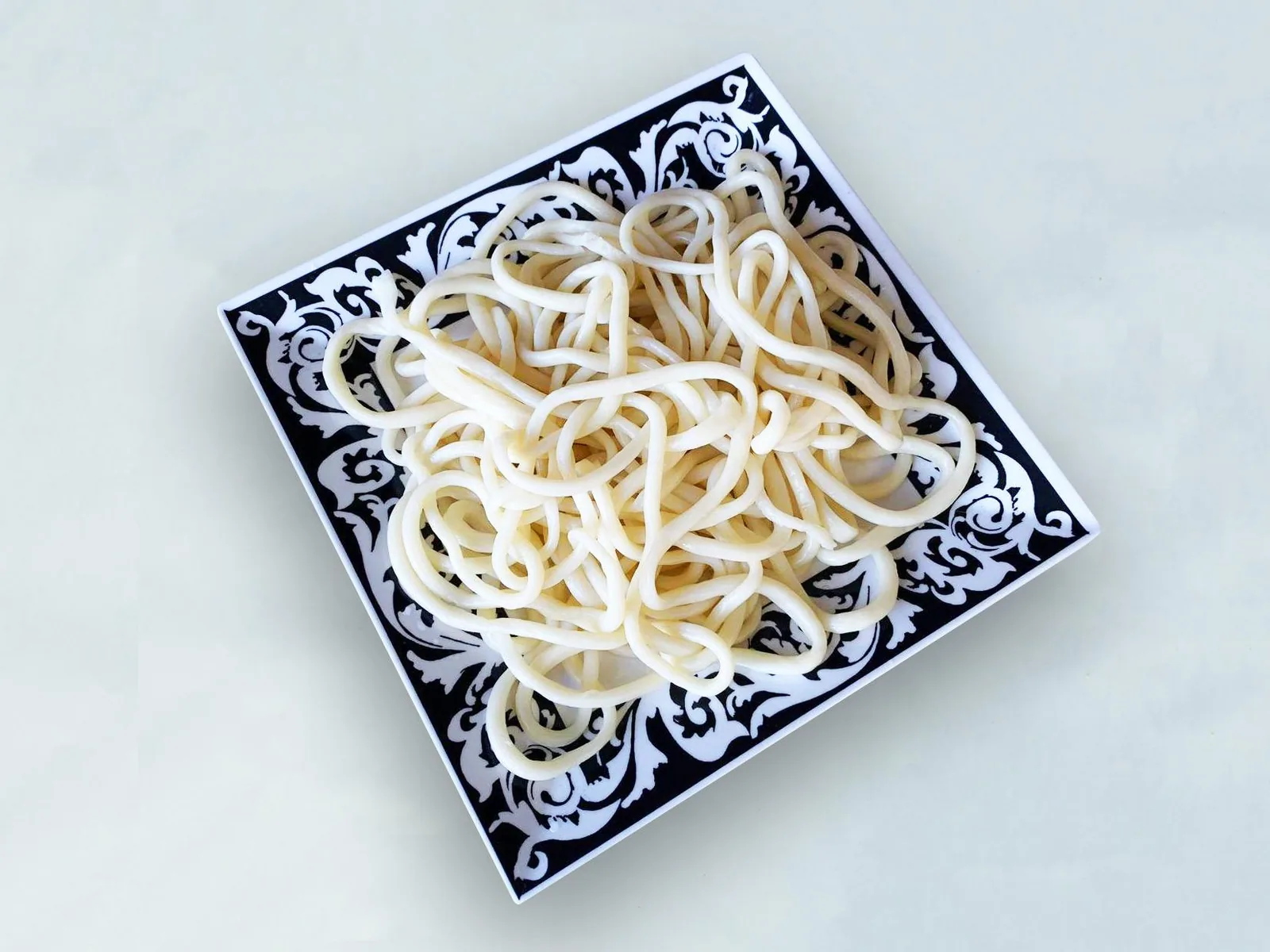
Laghman dough could not be simpler — wheat flour, water and salt, kneaded until smooth and then left to rest so the dough relaxes. The cook divides it, rolls each piece into a thick rope, brushes the ropes with oil and coils them on a tray to rest again. The oil is the secret: it keeps the coils from sticking and lets the dough stretch without tearing.
Then comes the part that gives the noodle its name. The cook lifts a rope by both ends, swings it, slaps it against the board, folds it back on itself and stretches again, each pass drawing the strand longer and thinner. In the Uyghur way, the rope is pulled out as one continuous noodle — a single serving can be one strand many feet long, coiled straight into the boiling water. A few minutes later it is lifted out, rinsed and ready.


What you taste is the pulling. Stretching the dough by hand develops and aligns its gluten along the strand, and that is what gives laghman its dense, springy chew — the texture our menus simply call "chewy." Noodles cut from a sheet or pushed through a machine can be good noodles, but they are not laghman: the word itself means the pulled noodle, and the hand that pulls it is part of the recipe. It takes new cooks months of practice to pull a clean, even strand, which is why the laghman maker is the most respected pair of hands in a Uyghur kitchen.
The sauce: säy
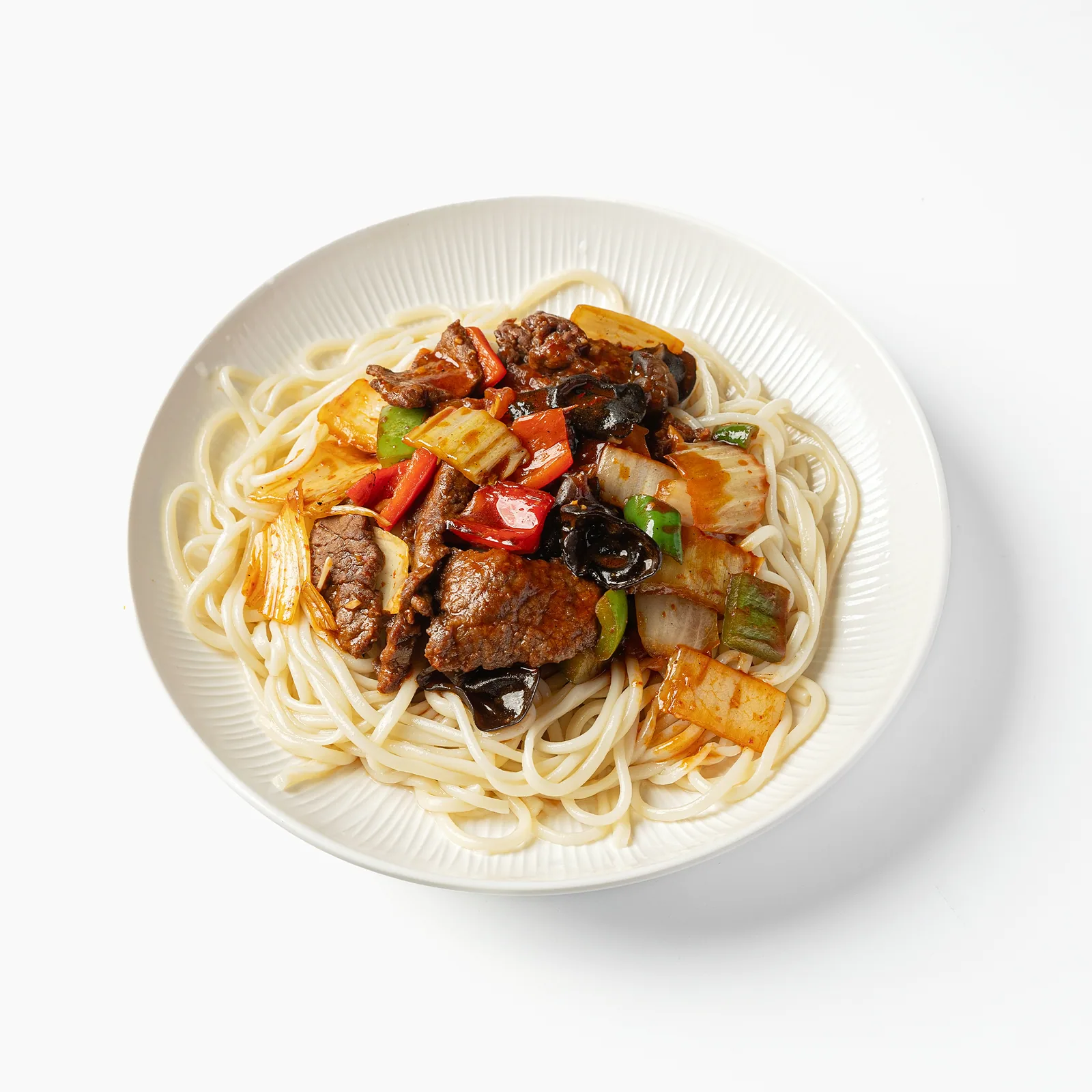
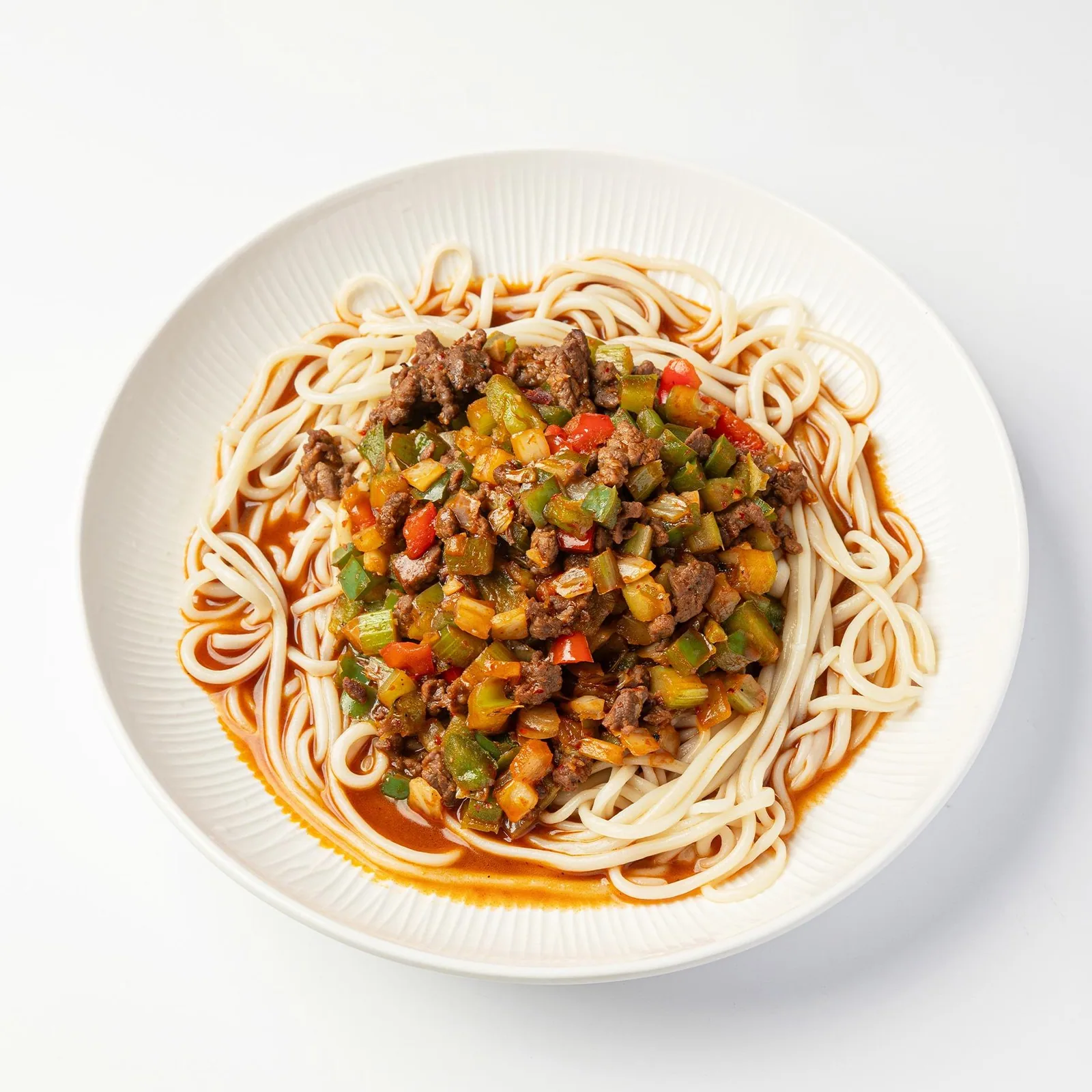
Over the noodles goes the säy, the Uyghur word for the stir-fry that turns a plate of noodles into a meal. It is cooked fast, in a wok over high heat. Beef — or lamb, the traditional choice — is cut small and seared first; then onion and garlic, green and red peppers, tomatoes, and celery or whatever the season offers, from cabbage to green beans. Cumin and chili season it, a ladle of stock loosens it, and a short simmer thickens the juices into a glossy, brick-red sauce. Our kitchens finish it with a touch of oyster-flavored sauce for savory depth, then spoon it generously over the noodles. At the table, vinegar and chili oil are yours to add.
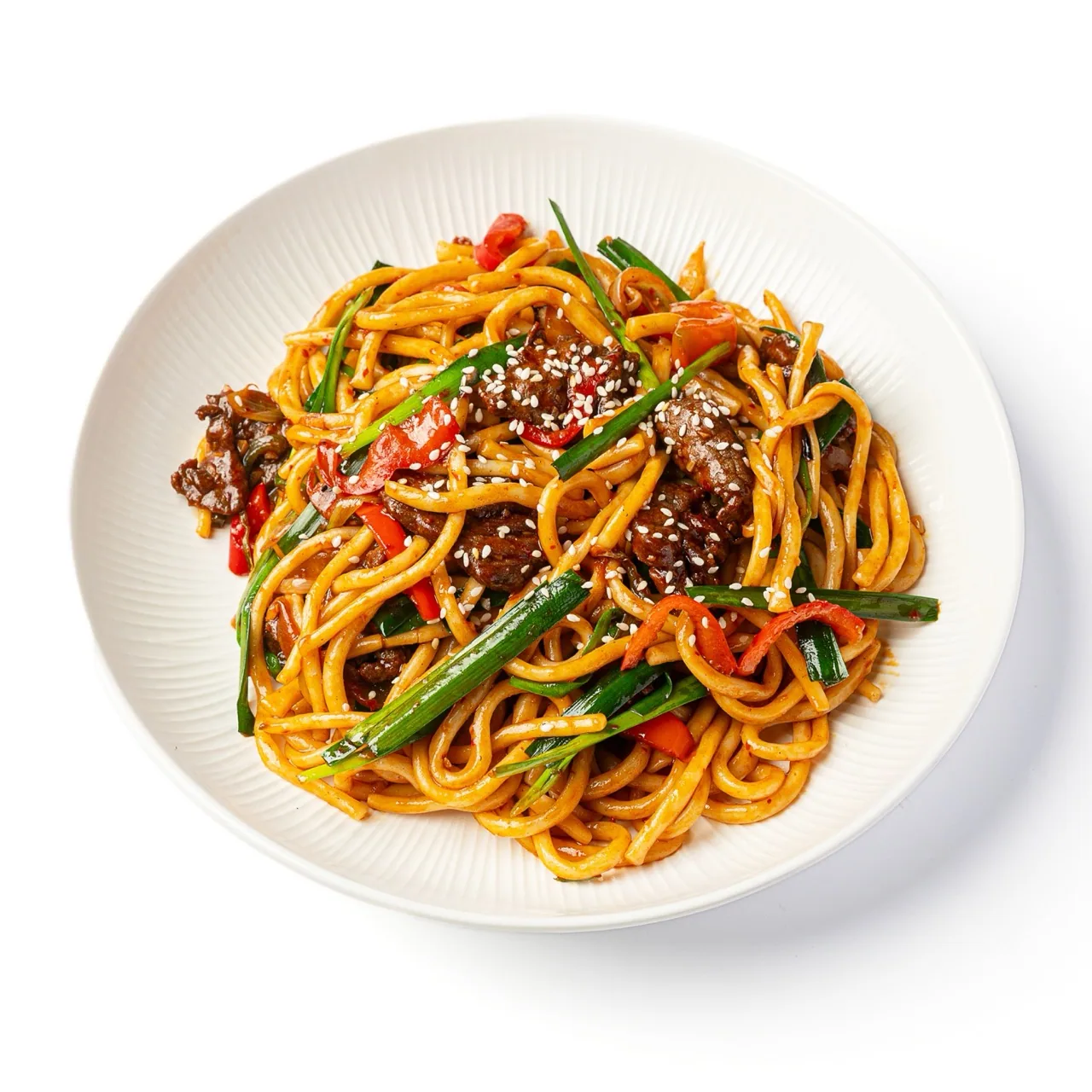
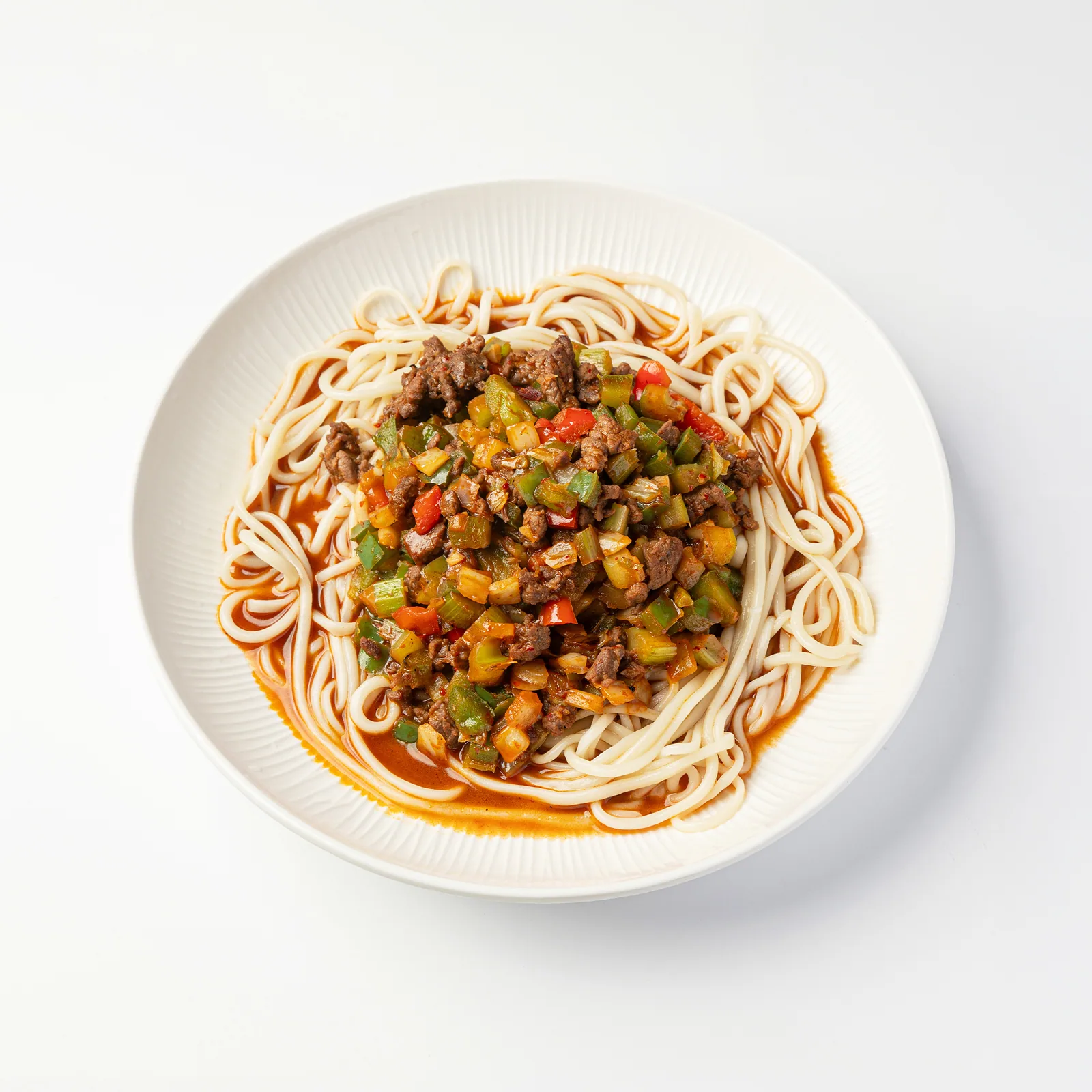
We serve laghman two ways. Dolan Laghman is our house plate: sautéed beef with a changing combination of finely cut vegetables — peppers, celery, onion and tomato on most days — in a savory sauce over hand-pulled noodles. Royal Laghman is the fuller version: beef in larger pieces stir-fried with onions, cabbage, mushrooms, green and red peppers and tomato, and it comes vegetarian, with chicken, beef or shrimp as well (lamb or tofu at some locations). And when the noodles themselves go into the wok with the säy and are fried until sticky, you have Korma Chop — laghman's fried cousin and our most-ordered dish.
A dish of the Silk Road
Noodles are ancient in the Uyghur homeland. In tombs near Turpan, archaeologists have found noodles about 2,500 years old, and the oasis cities around the Taklamakan have been kneading and stretching dough ever since. Turpan is the heart of that homeland — for some four centuries from the ninth century the seat of the Uyghur kingdom of Qocho — and its Astana tombs have also given up dumplings, wontons and decorated pastries from the seventh and eighth centuries, some thirteen hundred years old, preserved by the desert air in shapes a Uyghur grandmother would recognize. The oldest noodles yet found anywhere come from further east, at the Lajia site on the upper Yellow River in Qinghai — the northwestern country Uyghurs count as part of their historical world, beside Gansu, where the Sarigh (Yellow) Uyghurs still live. Reported in 2005, they had lain under sediment for about 4,000 years; they were millet, and how they were made is still debated.
In Uyghur homes, laghman is everyday food and guest food at once — an ordinary family lunch and the first thing a host makes when neighbors arrive unannounced, because the dough is always within reach. Pulling noodles is learned at home, child beside grandmother; a cook's laghman is a kind of signature. When a Uyghur family far from home wants to taste the homeland, this is the dish they make.
Where laghman comes from, and where it went
And the word? Chinese dictionaries parse lamian as la, "pull," and mian, "noodle"; Uyghurs tell it the other way, and so do we: läghmän is the older word, and lamian is the Chinese rendering of it, much as maikefeng renders "microphone." Even inside China the pulled noodle is a northwestern food: the "Lanzhou" noodle shops of every Chinese city are run overwhelmingly by families from Gansu and Qinghai — above all from Hualong county in Qinghai, whose people alone run some twenty thousand of them. That is old Uyghur country: the Ganzhou Uyghur kingdom stood in the Hexi corridor of Gansu from the ninth to the eleventh century, and the Sarigh Uyghurs, the Yugur, still live there in Sunan county with a kindred food culture of mutton, milk tea, hand-made noodle sheets and dumplings. Laghman as we eat it today, with its tomatoes and peppers, is younger than the word — those crops reached Central Asia only a few centuries ago — but the noodle under the säy is the old one.
From the oases of the Tarim Basin and the orchards of the Ili valley — the region around Ghulja where our founder, Hamid Kerim, was born — Uyghur families carried laghman west. When the Ili region passed from Russian back to Qing control under the Treaty of St. Petersburg in 1881, its people were given the choice to move into Russian territory, and over the next three years tens of thousands of Uyghurs from the Ghulja area resettled in Semirechye, in today's southeastern Kazakhstan. The great migration Uyghurs remember as Köch-köch came in the spring of 1962, when some sixty thousand people — Kazakhs and Uyghurs for the most part — crossed from the Ili valley and Tacheng into Soviet Kazakhstan. It was this wave that spread Uyghur laghman widely through those countries: today lagman is on every café menu in Almaty and Bishkek and a staple across Uzbekistan, and in Kazakhstan and Uzbekistan it is still often sold simply as "Uyghur lagman."
At the Uyghur table the word covers a small family of dishes. The noodle comes two ways: tartma, pulled by hand into one long strand, like a bolder spaghetti; or kesme, rolled flat and cut with a knife, like linguine or fettuccine. Suyuq läghmän puts the noodles in broth — think of a beef or lamb noodle soup — while our Dolan Laghman and Royal Laghman belong to the sauce-over-noodles side of the family, a thick säy spooned over the strands. The same hand-pulled noodle makes a different dish altogether when it is cut short and fried with its own vegetables and seasoning: the Uyghur fried noodle, Korma Chop on our menu — a cousin of laghman rather than a version of it. Whichever way it comes to the table, the first test is the same: the chew of the noodle.

Why it matters at Dolan
Our founder, Hamid Kerim, puts laghman first among the dishes that define us: hand-pulled noodles, he writes, "demonstrate the craftsmanship involved in Uyghur cooking." He measures Dolan's success not in restaurants opened but in moments — "watching someone try hand-pulled noodles for the first time." A bowl of laghman is how most of our guests meet Uyghur culture, and it is a generous introduction: one long noodle, a sauce made from what the market had that morning, and a table where everyone reaches in.
Dolan Laghman and Royal Laghman are on the menu at every Dolan location — Washington DC, Chantilly, Falls Church, Rockville and Arlington — for dine-in and takeout, and the noodles are pulled fresh in each kitchen every day. If you have never had laghman, start there. If you grew up on it, we hope ours tastes like home.
Discover the culture. Count memories.