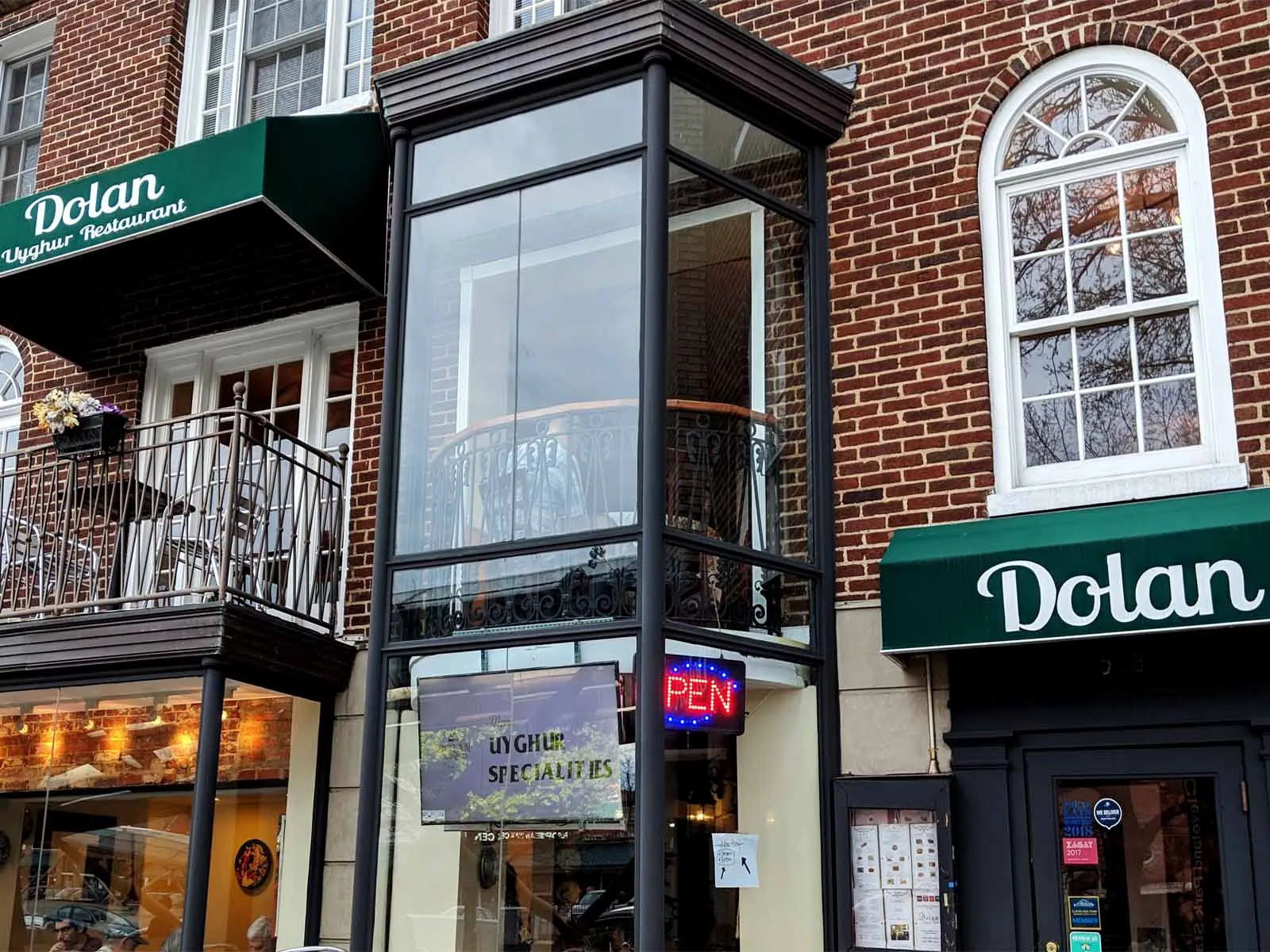
In October 2020, Washington City Paper's Michael Loria wrote about a cuisine most of Washington still could not place — heavily spiced lamb and tomato-based sauces that suggest Turkey, aromatics that smell East Asian, and long hand-pulled laghman noodles that are the real giveaway. Part of his reporting brought him to Dolan in Cleveland Park, where Hamid Kerim told him a story he rarely tells in full.
Hamid remembers the exact date he left Ürümqi: April 9, 2017. That morning a friend stopped him on the street outside his apartment, waved him over to her car, and told him the police had his name on a list for that day. If he could go, she said, he should go. He flew to Guangzhou, then South Korea, then on to the United States. "I won't forget these days, brother," he told Loria. In his old life he had traded along the Silk Road, between China and the Turkic-speaking countries from Kazakhstan to Istanbul. "Now I work hard, making noodles, cooking. I had to change my life."
After a year of English classes and deciding what to do next, Hamid bought Dolan from its previous Uyghur owners in 2018. The appeal, he explained, was a business where he could also explain where he came from and what was happening there — something he considers more important than money. "I cannot protest outside every day saying I'm Uighur," he said. "But in here, at least 50,000 people [come in]. They eat this food, think about it, ask what this food is. It's delicious and Uighur… You know [running] a restaurant isn't easy, it's very hard, but I think about this and I relax. I say, 'Alhamdulillah, praise God.'"
Loria also ate. Hamid started him with the sui rou laghman — thin, chewy noodles with beef and sautéed vegetables that Loria found "homey, like a family recipe for bolognese" — and recommended the hot chicken stew, our braised bone-in chicken served over a tangle of laghman and meant to be shared. City Paper's photographer, Darrow Montgomery, shot the noodles being pulled in our kitchen.
The article ended on Hamid's family: two children who were in preschool when they arrived, who still speak Uyghur at home, and whose memories of where they were born are fading. It is a reminder of why the dining room matters. Every pot of tea we pour is a small act of remembering.
This article is our own account of the coverage; short quotations are attributed to Washington City Paper, which holds the copyright to the original piece.