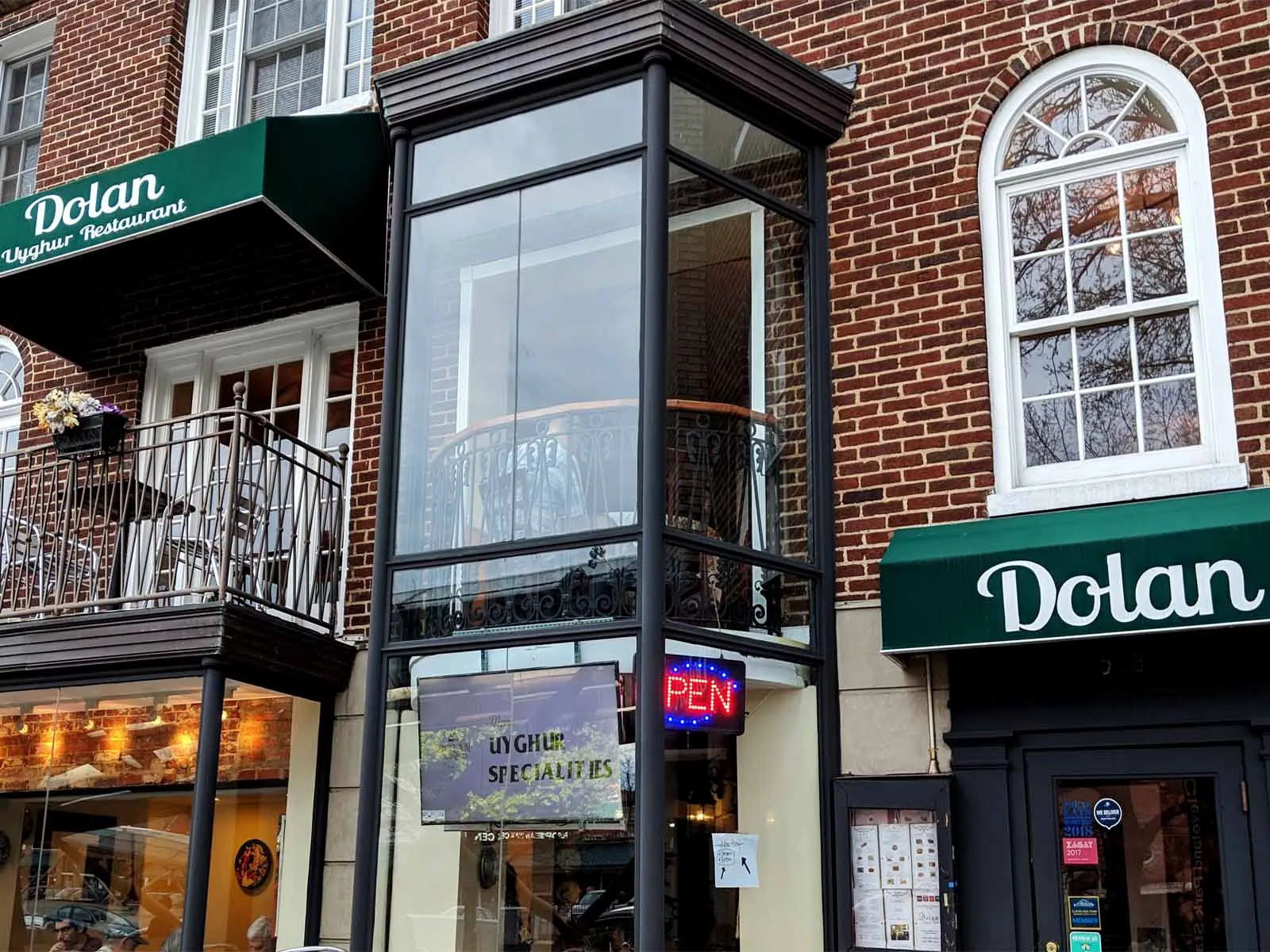
In December 2022, DCist — the local newsroom of WAMU 88.5 — published a long feature on what Uyghur restaurants mean to the Uyghur people who live in the Washington region, the largest such community in the United States. The piece visited several kitchens. Its conversation with Hamid Kerim took place at our Cleveland Park table.
Reporter Liam Scott described the role these dining rooms play: they give Uyghurs in the diaspora "the taste of a homeland that they cannot return to," help preserve a culture under pressure, and offer a way to tell non-Uyghur neighbors what is happening. The article laid out that context plainly — the mass detentions since 2017, the crackdown on halal food establishments in the homeland, the determination of U.S. and other governments that the campaign constitutes crimes against humanity and genocide.
Hamid told Scott he is adamant that he is not a political person. But the crisis makes it impossible to separate Uyghur culture from politics, he said, so he feels a responsibility to speak through the food. "This is not easy. We've lost a lot. We've lost culture," he said. "I have to talk about Uyghur issues. I have to let people know who the Uyghurs are and where the Uyghurs come from."
The article recounted that Hamid moved to the United States in 2017 shortly after learning he was allegedly on a government blacklist, and that one of his brothers was jailed in 2018 and is serving a twenty-year sentence. "The Chinese want me to stop talking," he said. "But I cannot stop talking because this is not only my family's problem."
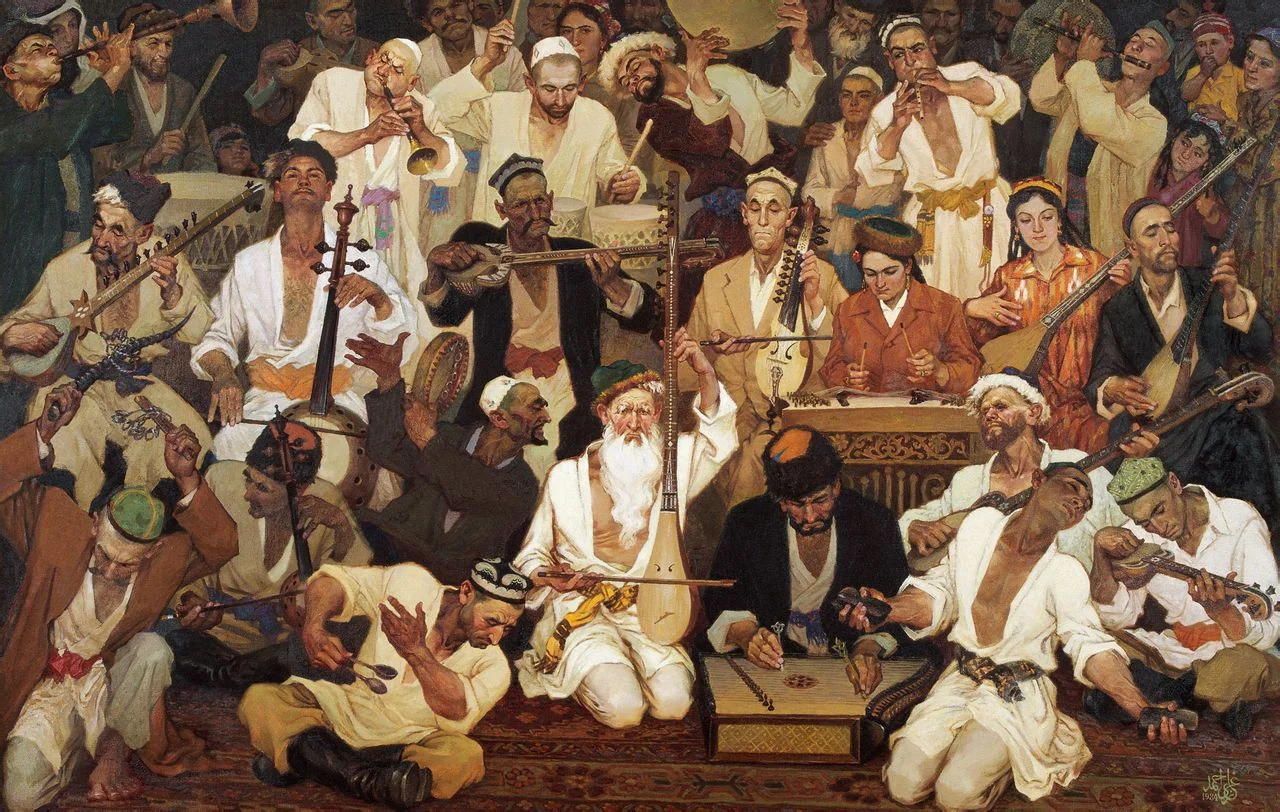
Scott also described how the region's Uyghur dining rooms look and sound — the traditional instruments and doppa caps on the walls, Uyghur music playing, and, in every one, a print of the famous 1984 painting "Uyghur Muqam" by Ghazi Ehmet. Guests at our Cleveland Park restaurant will recognize it: the painting hangs there too, a crowd of musicians with rawap and dutar gathered for the muqam, the classical Uyghur musical suite.
For readers, the feature was an introduction to the dishes we serve — laghman, lamb kebabs, pilaf, chicken stew, pumpkin dumplings and samsa — and to an idea one of the Uyghur voices in the piece expressed well: in Uyghur culture, food means love; if someone feeds you, they feed you out of love. That is the spirit we try to put on every table, and the reason Hamid keeps talking.
This article is our own account of the coverage; short quotations are attributed to DCist / WAMU, which holds the copyright to the original piece.